On Constant Delay allows you to experience the life with repetitive obsessions and compulsions
If you haven't played On Constant Delay yet, probably now it's the best time that you don’t want to put it off any longer.

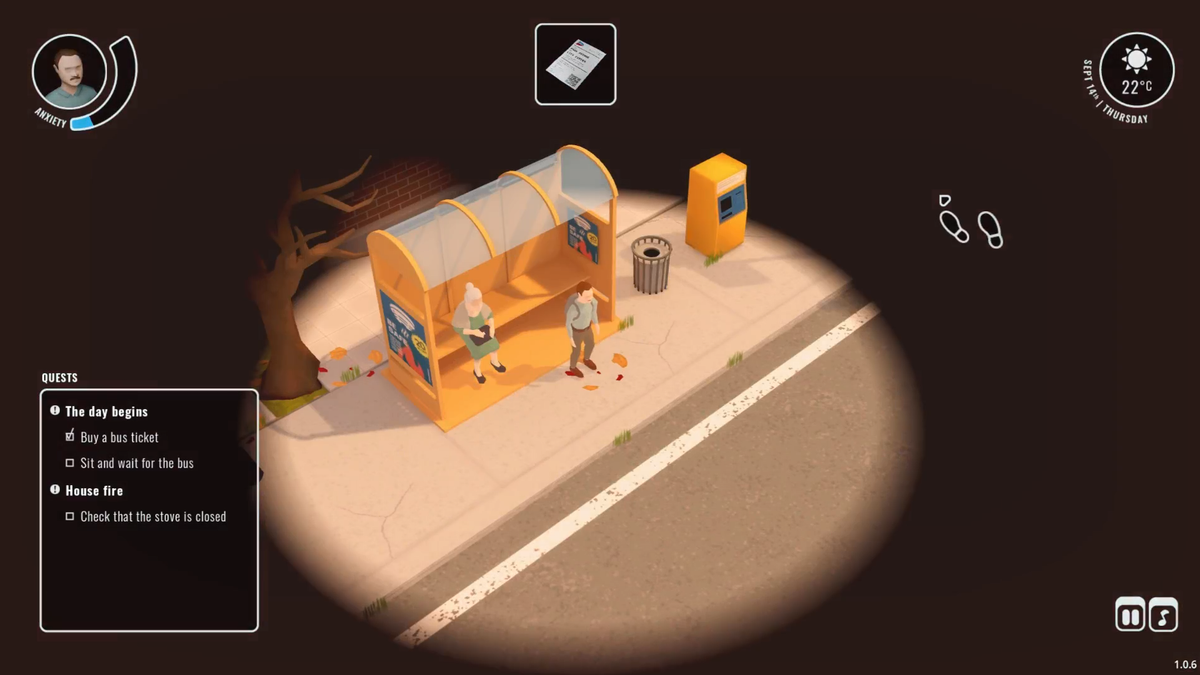
If you haven't played On Constant Delay yet, probably now it's the best time that you don’t want to put it off any longer.
On Constant Delay is a short, narrative based educational game that sheds light on the detailed reality of a daily life with obsessive-compulsive disorder (OCD) and pulls us into the experience and struggles of what it is like.
It was initially released as the browser version on itch.io in October 2024, and became available for mobiles both iOS and Android just about two weeks ago. The mobile version has more updates and it effectively managed to depict its original theme. That's why I've decided to write this article at this time.
Actually, there are a couple of other reasons I'd like to highlight this game. The initial version of On Constant Delay was created for the online game jam called Mental Health Game Dev Champions 2024 hosted by Safe In Our World, a UK based mental health support organization for the games industry and community. It results in receiving the grand game award of the event among other amazing submissions.
I had honorly taken the role as an ambassador at Safe In Our World last year, but I've missed the chance to celebrate this great victory. So I'm kind of attempting to make up for my procrastination (hoping it's not too late).
Adding more personal motive, On Constant Delay deeply resonates with every footprints of my life as well. Even though I haven't been formally diagnosed with OCD, my autistic part of the brain tends to be obsessed with lots of things which most people might easily pass through. That often causes somewhat similar consequences just like a protagonist of this game is going to face.
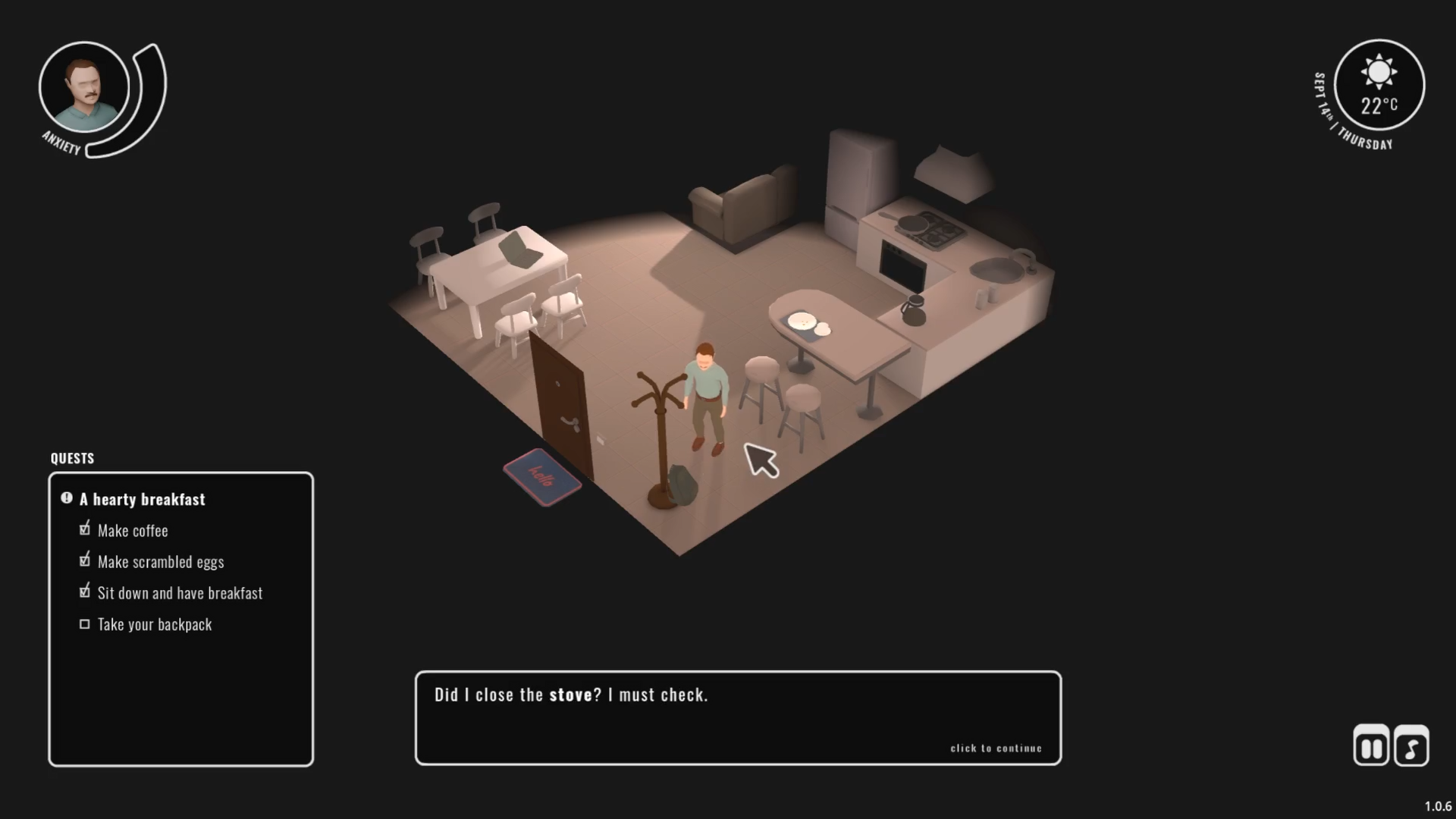
In On Constant Delay, we play as Leonard and are given the mission to complete his daily tasks. Leonard’s life has been surrounded by the various kinds of potential triggers that occasionally drive him to his obsessions and compulsive behaviors. Leonard seems to be a comparably mature guy, and lives by himself on the sixth floor of an apartment. The game itself doesn’t reveal much of his personal background though, his neatly organized room implies Lenord has been maintaining pretty healthy routines around himself and there’s nothing wrong with it at a first glance.
The game consists of three different chapters, each of them is set on the scenes between Leonard prepares for going to work and heads to a bus stop just a few steps from his apartment. From the perspective of distance, they could be considered as quite short journeys but his days have to go through undesired rewinds repeatedly as his anxiety grows over and over.
Looking into the first chapter for example, Leonard cooks scrambled eggs for his breakfast. He's careful enough to close a stove when the cooking is done, but begins to worry it has been appropriately turned off and checks it over before he leaves the room. As the elevator has been broken, he approaches the stairs and then suddenly an unsettling thought comes across his mind: what if the stove is not still turning off?
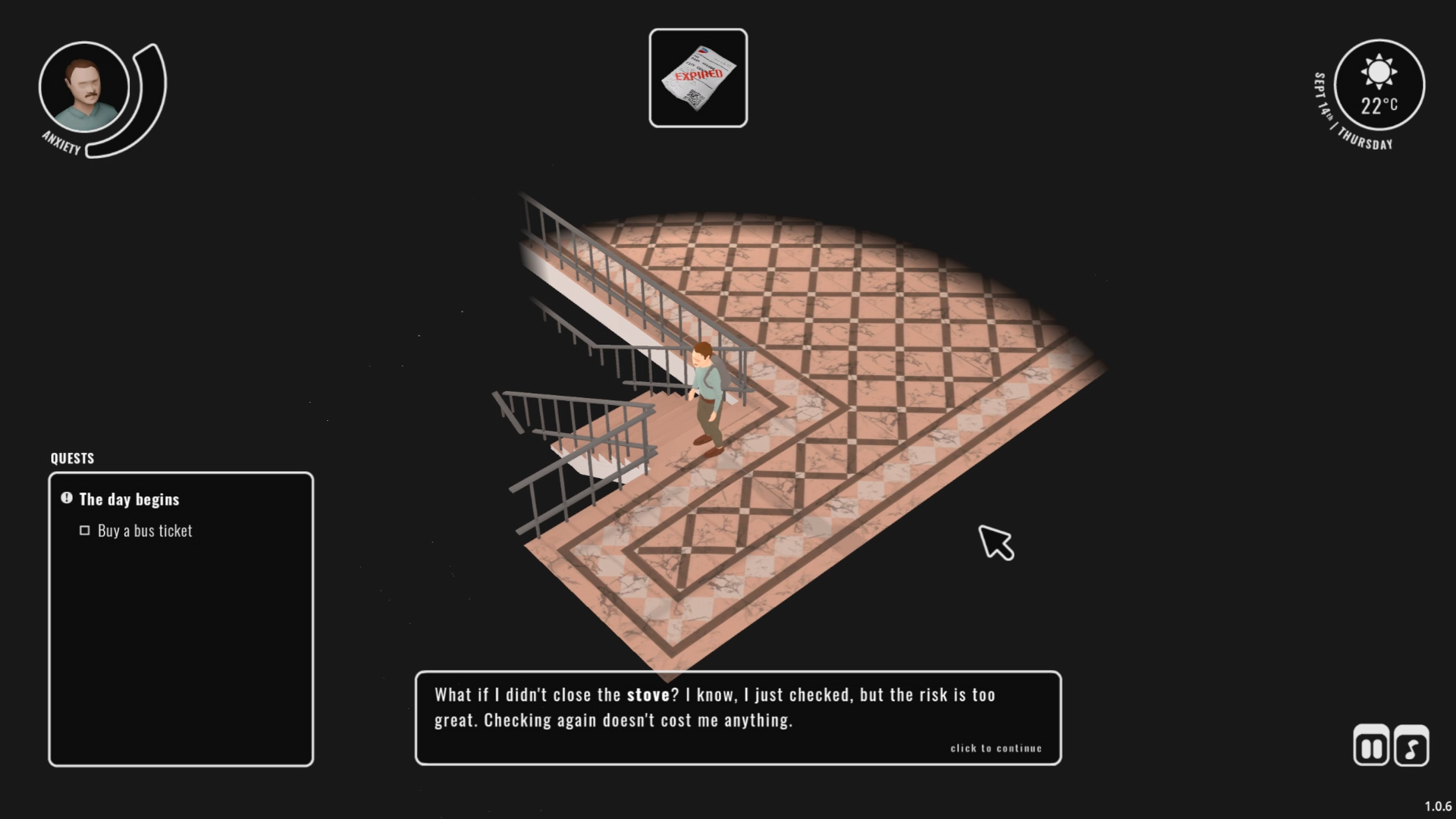
Again, Leonard must go back to his room and make sure of the stove's condition just in case. He says in the internal monologue that overchecking doesn't cost him anything. However, considering his situation, he's obviously at the risk of being behind time and late for work. That fact won't allow us to be so optimistic.
Though Leonard fortunately manages to arrive at his destination right before the bus comes, he accidentally finds the advertisement of a smoke detection system, which leads him to the feeling the stove hasn’t been shut down yet. The screen fades to black in response to his trapped mood, and his monologue appears as the text to convey that he's now in the deepest fear of losing control. Here, he must return to his room once more. Additionally, he needs to dash the stairs all the way up to the sixth floor this time.
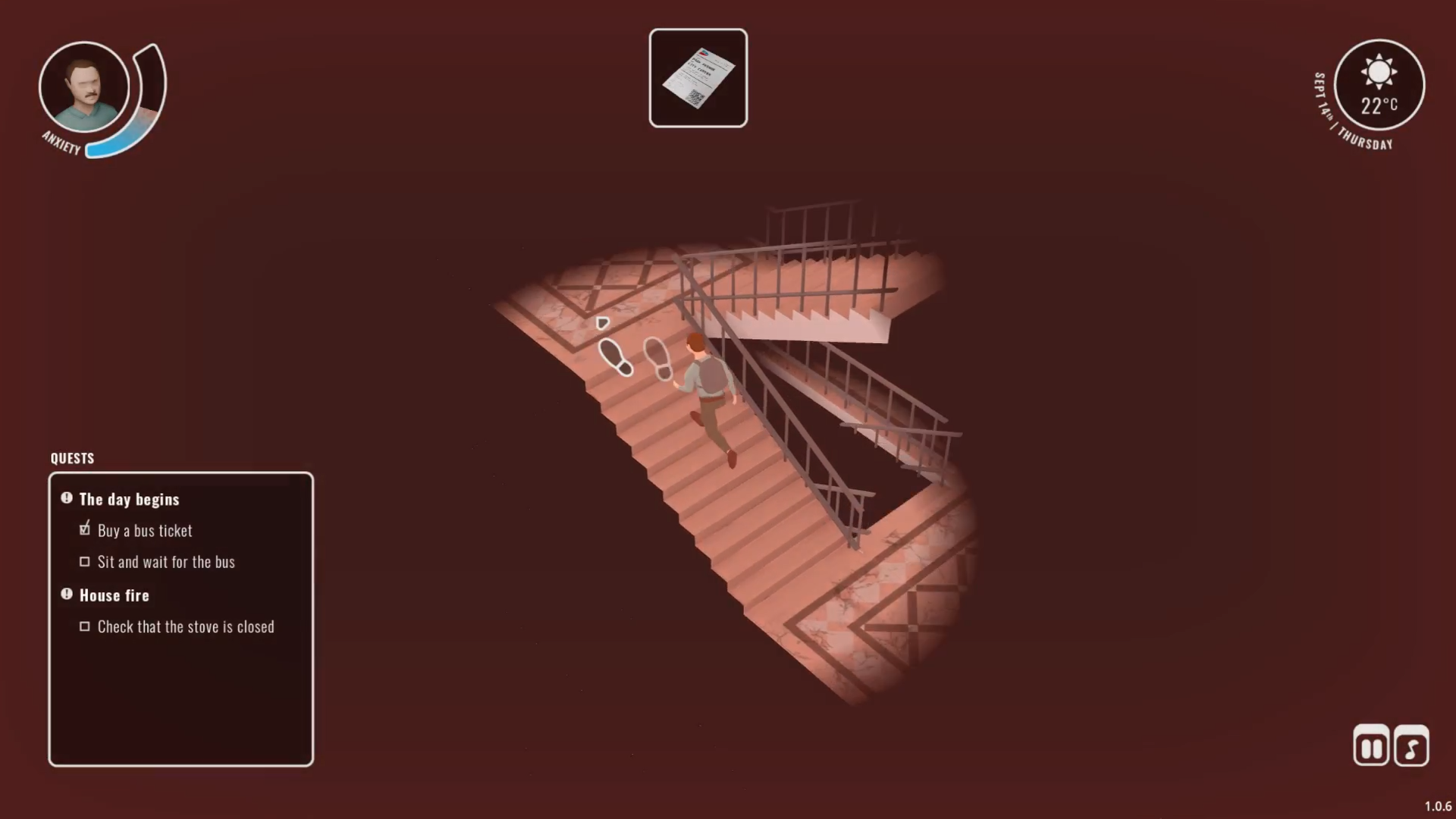
As Leonard's anxiety reaches its highest, the game reshapes our sight much narrower and the warning red lights start flashing. Even the delusional sounds of fires and sirens also carry the quite intense moments that expressively overlap to his panicked inner mind. Going through with his third time confirmation, he's now finally able to let himself go to the bus stop (again, he has to walk down to the first floor) and then realises that the bus has already left.
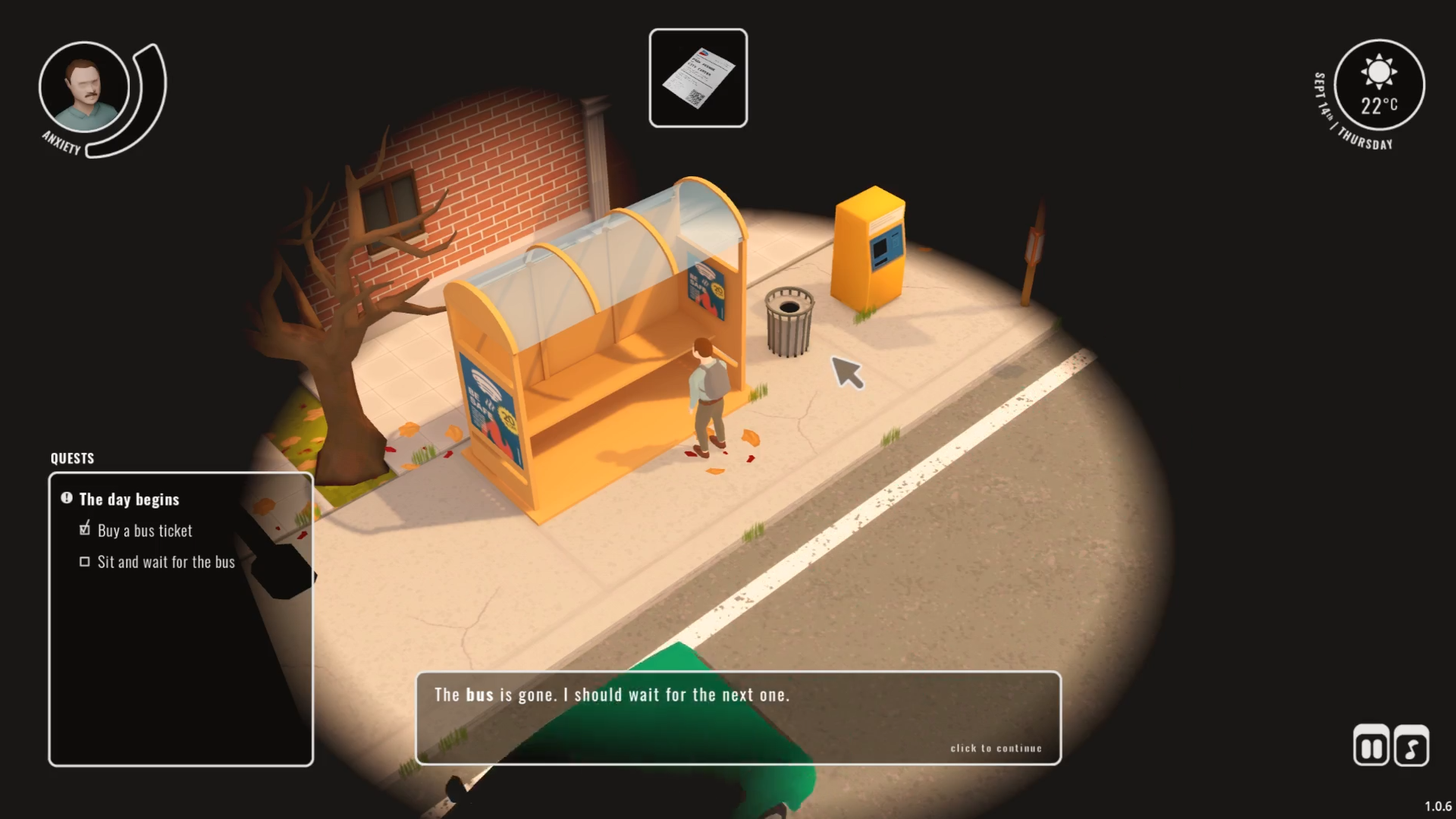
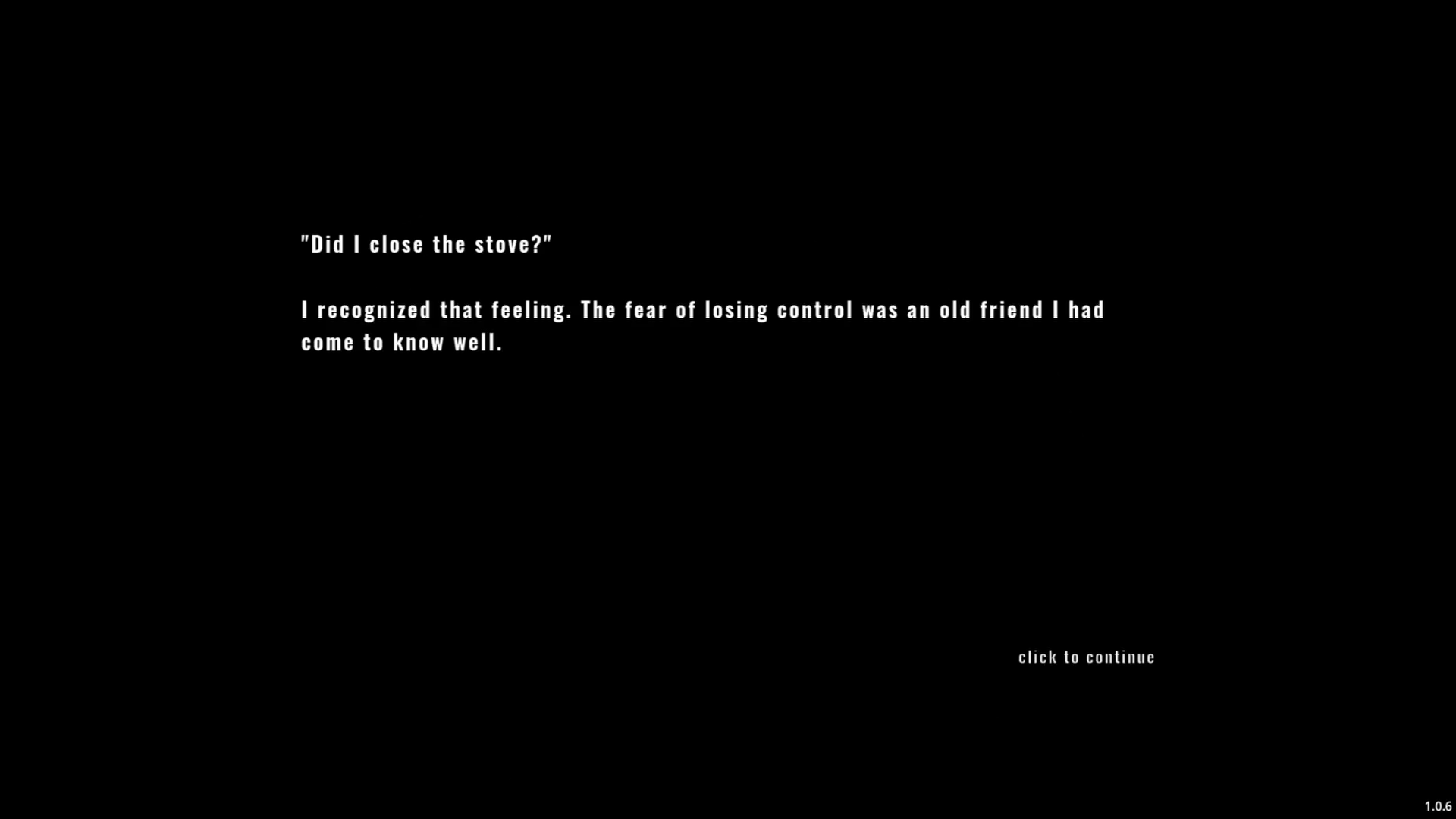
In the following two chapters, the game delves into other aspects of Leonard's challenges in slightly similar but different angles. He learns from his struggles and clearly shows the willingness to make his life better, which successfully removes the cause of his symptoms to some extent. But on the other hand, he won't be completely free from all the triggers. As he said in the screenshot above, his sense of fear is always with him like an old friend.
I haven't mentioned it yet though, Leonard also encounters many side quests during each chapter. Those don't affect the progress of the main story at all, but they are full of opportunities to learn how he's thoughtful of others and plays an important role around the community with his sharp eyes. While being with OCD could bring unpredictable troubles to his life, that seems to have Leonard build quite a good relationship with his neighbors. To be honest, that positive side of his portrayal gives me a fair and sincere sense of conviction in the way dealing such a theme.
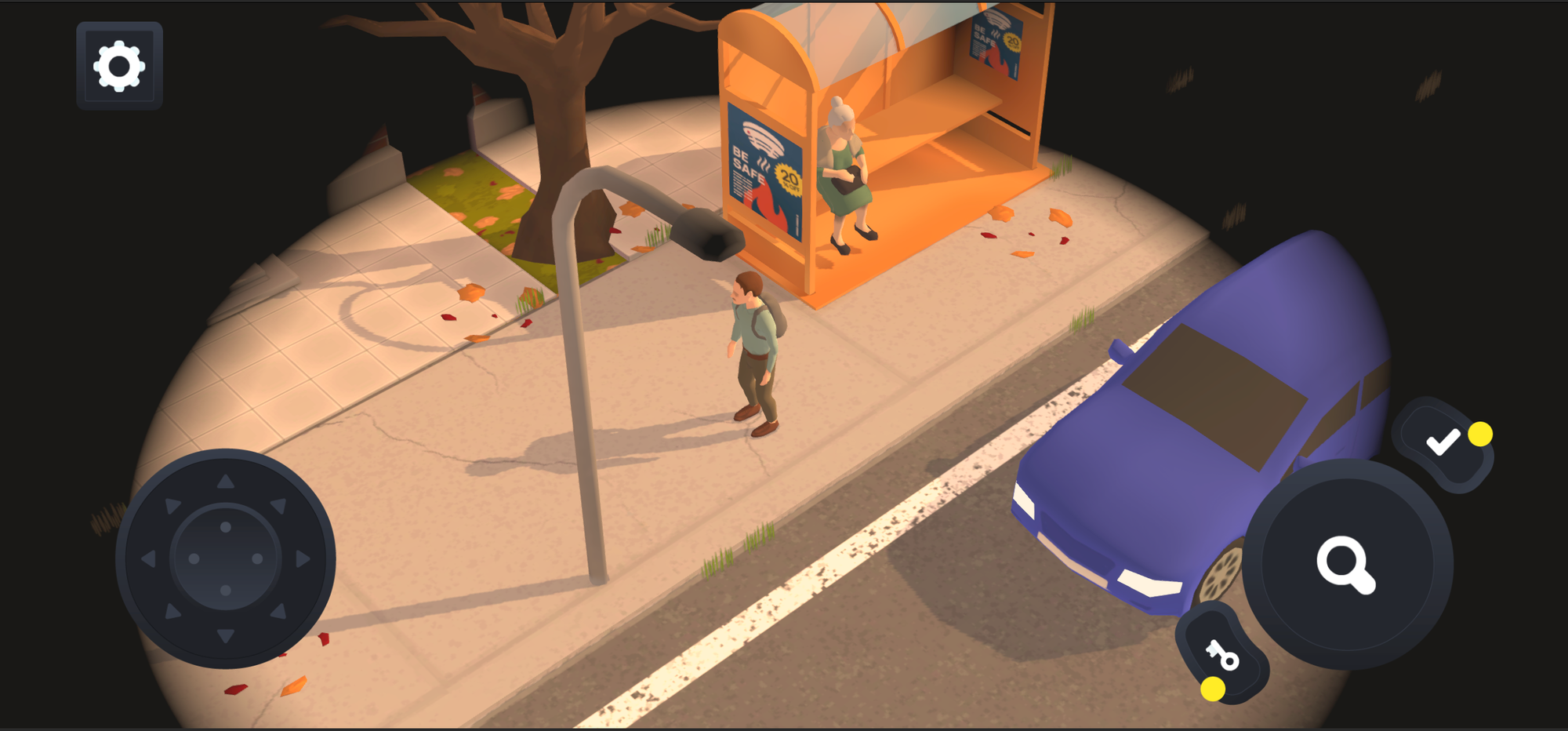
Lastly, I'd like to touch on the updates in the latest mobile versions. I highly recommend playing with either iOS or Android apps because the whole experience would be much different. In the browser version, we navigate Leonard by clicking the point to move. But the mobile version allows us to do that through a virtual gamepad that carries a more immersive and strong connection of the feeling to the character. Plus, the quest and item icons become hidden from the default screen, so that players need to tap them on many occasions to check what their current conditions are. This repetition also harmonizes with Leonard’s insecureness that has to be proven as correct over and over.
On Constant Delay enables us to have a slice look of life with obsessions and compulsions you can't help but keep holding. Leonard might continue to miss his buses from time to time, but that doesn’t mean he’s not a totally good fit in the society. The developer Schiaffella brothers as Narrativi Digitali has achieved a really incredible job to create such educational but also emphasizing moments from their lived experiences. Now there’s no reason to wait for your downloads.